Mostrar mensagens com a etiqueta Ornitology. Mostrar todas as mensagens

1 de julho de 2015

Cheiro funciona como bússola de pássaros no céu; o fim de 40 anos de debate

Como é que os pássaros encontram o seu caminho em meio a oceanos extensos? Esta quarta-feira pesquisadores publicaram uma possível explicação na revista da Royal Society britânica: o seu GPS é o nariz.

Enquanto os seres humanos podem se perder no espaço de dois segundos e a dois passos da casa, as aves marinhas voam durante dias e noites sobre os oceanos, encontram a sua refeição favorita e regressam para o seu ninho sem nunca se perder.


Estudos prévios já demonstraram a capacidade dessas aves para localizar as suas colónias de reprodução, muitas vezes localizadas em pequenas ilhas perdidas no mar, graças a odores transportados pelo vento.

Investigadores portugueses, ingleses e italianos avançaram um pouco mais na solução deste mistério que fascina cientistas há décadas: as aves marinhas, como os albatrozes, os petréis e as pardelas usam algum tipo de odor para se orientar através da imensidão azul sem referência visual.

Os cientistas analisaram os modelos de voo de 210 aves pertencentes a três espécies de cagarras, com a ajuda de gravadores de GPS durante o período de incubação e criação dos filhotes.

Com base nessas análises de voo e dados estatísticos, os pesquisadores demonstram que as aves marinhas são guiadas pelo seu sentido de cheiro e navegam usando uma imagem mental de cheiros locais, transportados pelos ventos locais.

«O acordo entre as previsões teóricas e as observações foram chocantes, uma grande surpresa», explicou o britânico Andrew Reynolds do Instituto de Pesquisas Rothamsted, um dos principais autores deste trabalho.

O dimetilssulfito - que vem em grande parte do plâncton em suspensão na água - ou de outros odores típicos dos locais podem formar uma paisagem olfactiva. E essas aves, que vivem um longo tempo, pode aprender a memorizar esses cheiros.


«As nossas descobertas põem fim a 40 anos de debate sobre a navegação das aves», afirmou Andy Reynolds.

3 de fevereiro de 2015

What can the canary genome tell us about the evolution of birdsong?


New research published in Genome Biology reveals clues on the evolution of singing behaviour in canaries.
Stefan Leitner, Carolina Frankl-Vilches and Manfred Gahr are from the Department of Behavioural Neurobiology at the Max Planck Institute for Ornithology in Seewiesen, and Heiner Kuhl and Martin Werber are from the Sequencing Core Facility of the Max Planck Institute for Molecular Genetics in Berlin, under guidance of Bernd Timmermann. They are main authors of an article in Genome Biology where they identify the canary genome and then use it to decipher the evolution of hormone-sensitive gene regulation in seasonal singing birds.
Songbirds comprise almost half of all bird species and exhibit a complex behaviour with their elaborate song, making them suitable for neurobiologists to gain insight into general mechanisms of behaviour.
The canary has become a preferred model to investigate the neurological changes (or ‘brain plasticity’) affecting hormone-dependent song. This is because it has a pronounced reproductive season, with seasonal changes in song and steroid hormone concentrations, and a varying degree of brain plasticity between the breeding and the non-breeding season.
Canaries have been domesticated since the 15th century and are the descendants of the wild canary that lives on the Azores, Madeira and Canary Islands in the North Atlantic Ocean. Like their wild ancestors, domesticated canaries sing stereotyped songs under long-day (breeding) conditions and more variable songs under short-day (non-breeding) photoperiods.
We further looked at the wider implications of how the canary genome sequence not only permits the study of hormonal influence on song and behaviour, but also provides a good model for the study of neural plasticity that could serve as a model in molecular neuroscience studies.

10 de janeiro de 2015

Blood work: scientists uncover surprising new tools to rejuvenate the brain


Scientists used to believe that our neurologic fate was sealed at birth with a single, lifetime allotment of brain cells.

The thinking went – not so very long ago – that little by little, with the bumps of age and lifestyle, this initial stash of neurons died, taking our brain function along with them.
Illustration by David Senior


Yet, strange as it may sound, canaries, video games, and young blood are finally putting that punishing prospect to rest.

Studies involving bird song, gaming, and the rejuvenating factors of young blood have shown not only that neurons can be generated throughout adulthood, but also that the maddening aspects of ageing, such as memory loss and slower processing speed, can be partially reversed.

- See more at: http://www.domain-b.com/technology/Health_Medicine/20150110_brain.html#sthash.Oy4JyNFd.dpuf


Both neuroscientists and coal miners revere the canary, but for entirely different reasons. Like humans, canaries are known in neuro-science as ''open learners,'' meaning they learn throughout adulthood. ''Canaries learn songs, like we learn language, from older adults when young,'' explains Arturo Alvarez-Buylla, PhD, a stem cell neurobiologist at UC San Francisco.

As they get older, they tweak their songs seasonally to distinguish themselves during mating season. Alvarez-Buylla's mentor, neuroscientist Fernando Nottebohm, PhD, a professor at Rockefeller University, suspected that as these parts of the canary brain assembled and disassembled for the yearly acquisition of the new mating song, new neurons were being taken on board. Such a notion was unimaginable at the time.


''When Nottebohm proved by morphology, electrophysiology, electron micro-scopy, and connectivity between 1983 and 1986 that the new cells were neurons, the whole field of stem cell science became a lot more exciting,'' recalls Alvarez-Buylla, who holds the Heather and Melanie Muss Endowed Chair in the Department of Neurological Surgery. The jaws of neuroscientists throughout the world dropped at the possibilities posed by Nottebohm's finding.


Neurogenesis offered a new way to repair damage wrought by age, neurological injury, or disease. Alvarez-Buylla went on to advance the field ever further by identifying the neural stem cell, its origins, and its behavior in the mammalian brain.

Blood shotNow, decades later, young blood – literally speaking – has joined the canary as a harbinger and waypoint en route to realizing the promise of neurologic rejuvenation.
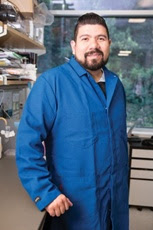
Last spring, University of California at San francisco (UCSF) Faculty Fellow Saul Villeda, PhD, published a study in Nature Medicine showing significant signs of reversal of age-related cognitive decline in old mice after they were infused with the blood of young mice over the course of several weeks. Two other studies showing the revitalizing effects of young blood in brain and muscle tissue were published at the same time.

''All three studies coming out simultaneously made things go supernova,'' says Villeda, who, at the age of 33, is a bit of a young blood himself. In the media frenzy that followed, Villeda was inundated with requests for interviews, in both English and Spanish.

Born and raised in East Los Angeles, Villeda was able to deliver in both languages. ''What we were saying collectively, across three impressive institutions – UCSF, Stanford, and Harvard – is that there is reversibility in the ageing process. It's a bit of a game changer.''

The experiment itself proved quite easy for Villeda to explain to the lay press. He and the graduate students in his lab took the blood of young mice, stripped it of its cells, and infused the remaining plasma into old mice.


They did this every three days for 24 days, using small injections of the plasma each time – just 5 per cent of a mouse's blood volume.

The young mice in the study were 3 months old, the equivalent of humans in their 20s, and the old mice were 18 months old, the equivalent of humans in their 60s.

Days later, he tested them for cognitive changes. In one experiment, the mice had to wind through a water maze and remember where a dry platform was hidden; in another, the mice had to recall a location where they had received a shock. ''When we gave them the injections of young blood, they no longer had the cognitive impairments of a normally ageing mouse,'' says Villeda.

''Their performance wasn't quite equal to the young mice, but pretty close.''

The two experiments tested the functioning of the hippocampus, a part of the brain, in both mice and humans, that is especially affected by normal ageing. It's our hippocampus that we use in searching for our car in a crowded parking lot. When we park, our brain, without prompting, will note spatial cues in the environment and keep them in mind to guide us back to the same place hours later. But the older we are, the more likely we are to forget those spatial cues, throw in the towel, and press the panic button to find the car.

''As we get older, we have fewer stem cells and newly born neurons in our brains, and our learning and memory are affected,'' says Villeda. ''It's not dementia, it's just the natural degeneration associated with age.''


Flipping SwitchesClearly, the young blood helped turn back the clock for Villeda's old mice. So he began searching for molecular and biochemical changes in their brains that might explain the transformation.

To accomplish this, he used the somewhat macabre technique of parabiosis, which involves sewing a young mouse to an old mouse so they share a single blood supply. After a month, he sequenced the genes of the old mice and found that the biggest changes occurred in genes associated with neuronal plasticity, the brain's response to learning.

When we are learning or responding to our environment, our brain either increases the number of connections among neurons or strengthens our existing neuronal connections.

''Normally, with ageing, the activity of genes that control synaptic plasticity decreases,'' says Villeda. ''We saw that exposure to young blood increased the expression or activity of these genes.''

The old mice with the new high-octane blood were blazing through the mazes because their neurons were making new connections, and solidifying previous connections, with the vigour of mice less than half their age.

Villeda and his students searched the gene array for some sort of mechanism that might be responsible for the surge of neuroplasticity in these middle-aged mice who, without the blood infusion, might still be trapped in the maze.


The patterns of activated genes and changes they found looked to Villeda like the work of a master regulator known as CREB.

''CREB is an old friend of neuroscience,'' he explains. ''We know that it's very important for learning and memory, especially during development.'' To figure out the extent of CREB's role, a student in Villeda's lab manufactured a virus carrying a phosphate that would turn CREB off, then repeated the blood-infusion experiments on mice lacking this master regulator. In the new experiments, the old mice with young blood gained some benefits of youth, but the effect was significantly dampened. The experiments showed clearly that CREB is important – but that it doesn't work alone.

''Now we know that as we get older, we are not necessarily losing the genes or proteins in our brains that we need to improve cognition. Maybe, like CREB, they are just not as active,'' says Villeda. ''We've identified one part of the mechanism to wake up the brain. Now we have to find the other genes it works with to replicate the full effect.''


Hold or Reset?Villeda is quite excited at the prospect of applying these findings to humans – a sentiment surely shared by anyone over the age of 40. ''We know rejuvenation exists,'' he says. ''Now we have to figure out the bare minimum of therapeutics or genetic tinkering necessary for it to be safely translated into a human. There are so many questions we have yet to answer.''

For example: What part of plasma is really driving the changes, and are they lasting? Mice only live an average of three years; we live 80. How often would humans have to be treated, and when should treatments start? Cell proliferation slows in old age, perhaps to offset cancer risk. Would young blood factors stimulate cancer? If so, it might be more prudent to switch off the mechanisms that initiate the ageing cascade.

''People who have a genetic predisposition for Alzheimer's have a mutation, but they don't get the effects until later in life, which means that something in their young bodies knew how to fight it or compensate for it,'' says Villeda. ''If we could reverse some of the ageing signs, perhaps we could maintain ourselves at a younger stage and then maybe not have to deal with diseases until far later in life.''

Game OnWhile Villeda is turning back the clock in his cohort of mice, Adam Gazzaley, MD, PhD, is beating back cognitive decline with a joystick. Dressed in a black shirt and sleek gray blazer, Gazzaley looks more like a biotech executive than a neuroscientist. It turns out he's both. Gazzaley rocked the world of neuroscience last fall with the release of a video game, NeuroRacer, that dramatically improved cognitive performance in elderly players. In the game, players drive a car along a winding track, while various signs flash into view along the way. Players are instructed to press a button when a specific sign pops up, ignoring the rest, all while keeping their eyes on the road.

''We developed NeuroRacer to put pressure on cognitive control abilities in a powerful way in older adults, who we know have deficits in this domain just by virtue of their age,'' says Gazzaley. ''The results were better than we even dreamed of.'' After one month and just 12 hours of training, players who were between 60 and 85 years old were scoring as well as 20-somethings who had just learned the game. And, retested six months later, the players were still holding onto those gains.

The cognitive skills Gazzaley aimed to improve with his game are selective attention, sustained attention, working memory, and task switching. ''We are building a tool to help people develop the cognitive control skills they need to interact with their environment based on their goals,'' says Gazzaley. ''If we're trying to do too many things at once and can't hold our attention to something we want to focus on, then all aspects of our lives suffer, whether it is family, work, safety, or even entertainment.''

Using EEGs, Gazzaley was able to show increased brain activity in the prefrontal cortex of the older players. After they played the game, their EEGs started to resemble those of 20-somethings. The prefrontal cortex, considered the seat of cognitive control, is the last part of our brains to develop – at around age 25. It is also the area that distinguishes humans from all other species.

The EEGs showed signs of connectivity to other parts of the brain as well. Like Villeda's mice and Nottebohm's canaries, Gazzaley's game-players were enhancing their neuroplasticity, adding new connections while strengthening existing ones. He confirmed these gains by testing other areas of cognition. When assigned a facial recognition challenge, Gazzaley's players showed improvements in working memory.


This showed that the benefits of game play were transferable to other brain functions. Transfer, considered the gold standard for effectiveness in the field, is evidence of underlying neural connections among different areas of cognition. ''That's exactly what we wanted to achieve – to see if we could change the brain in a meaningful way,'' says Gazzaley, ''and have that accompanied by changes in cognitive abilities that we weren't directly targeting.''


NeuroRacer is clearly not your ordinary video game, in which users try to reach ever-higher levels of expertise. While popular first-person shooter games have been shown to improve cognitive abilities in young adults, Gazzaley says this happens by accident. NeuroRacer is a closed-loop game, in which the level of play is adjusted to the player's behavior – and eventually to his or her own brain.

The next version of the game, which Gazzaley is developing with Boston-based Akili Interactive Labs, where he is chief science adviser, will feature closed loops that adapt during every second of play. Gazzaley's lab is also working on new games that employ transcranial electrical stimulation, a very mild shock targeted to particular parts of the brain to enhance learning. When playing one of these new games, the player receives low-frequency bursts of energy in certain parts of the frontal lobe. ''We are studying if you learn faster if you play a game while we stimulate you at the right frequency,'' Gazzaley explains.

The therapeutic and educational potential of such games is real and vast. They could be targeted, like NeuroRacer, to a healthy elderly population or be used as an educational tool in schools. Or they could be used to ameliorate known deficits in old and young alike. Gazzaley is currently working with pediatric neurologist Elysa Marco, PhD, on a game aimed at helping children with attention deficit disorder to better train their focus. The two are also teaming up to develop games for patients with autism, in an effort to stimulate the parts of their brains that the disorder has locked away.


80 IS THE NEW 20: The brain's command center for multitasking is in the prefrontal cortex. The brain scan on the left depicts the prefrontal cortex activity of Gazzaley's 20-year-old subjects as they played NeuroRacer, a video game that involves multitasking. The scan in the middle depicts the starting point for his 60- to 85-year-old players, playing the game the first time. And the scan on the right shows the progress the older players made after playing a total of just 12 hours over the course of a month. Their scans showed signatures of brain activity comparable to that of the 20-year-olds who had played the game once.


New bloodGazzaley and Villeda come at cognition along very different paths, but with equally impressive vigor and results. And they are energised by each other's work. ''Adam's games are incredible,'' says Villeda. ''Soon we will be able to grab an iPad and do games that will significantly improve our cognition. Who would have thought of that?''

Villeda sees parallels in their approaches to enhancing cognition during the ageing process – through collaboration. He joined forces with bioinformaticians to help him sort through his data, with molecular biologists to create viruses, and with behavioural neuroscientists to identify the best ways to test cognition. ''Immunology, neurobiology, and stem cell science all come together when talking about rejuvenation,'' says Villeda. He believes that building bridges among disciplines will be critical for translating what is now fascinating research into the clinical realm.

''Saul's and my research could be very synergistic in ways that we don't fully understand right now, and Alvarez-Buylla's work has been foundational to neuroscience,'' says Gazzaley. ''There is no Holy Grail for enhancing cognition, so what we probably should have been focusing on for the past 40 years is how the many interventions in our toolbox might interact with each other.''

Perhaps someday soon, baby boomers will be able to relive their 20s, at least cognitively, by taking a shot of Villeda's revitalizing plasma while playing a video game developed by Gazzaley. Or maybe Alvarez-Buylla will have figured out how to engineer the perfect mix of neural stem cells to rebuild what age tears down. While we wait, Gazzaley urges us to apply all the strategies that science has already endorsed: Research has long shown that diet, exercise, and enriched, engaging environments are good for the brain. In fact, a new study out of the Cleveland Clinic showed that people with a genetic predisposition for Alzheimer's were able to stave off neurologic decline with a three-day-a-week exercise routine. Those with the same disposition who chose not to get off the couch showed significant degeneration.

''Clearly the brain does not do well with comfort,'' Gazzaley says, ''so challenge it as much as you can.''
- See more at: http://www.domain-b.com/technology/Health_Medicine/20150110_brain.html#sthash.Oy4JyNFd.dpuf

5 de fevereiro de 2014

The eyes have it

https://www.exeter.ac.uk/


Researchers in Cambridge and Exeter have discovered that jackdaws use their eyes to communicate with each other – the first time this has been shown in non-primates.

Unlike their close relatives, rooks and crows, jackdaw eyes are almost white and their striking pale irises are very conspicuous against their dark feathers.
Gabrielle Davidson

While what humans do with their eyes has been well studied, we know almost nothing about whether birds communicate with members of the same species with their eyes.

The new study, published today in Biology Letters, shows that jackdaw eyes are used as a warning signal to successfully deter competitors from coming near their nest boxes.

Gabrielle Davidson of the University of Cambridge, who led the study, said: “Jackdaw eyes are very unusual. Unlike their close relatives, the rooks and crows – which have very dark eyes – jackdaw eyes are almost white and their striking pale irises are very conspicuous against their dark feathers.”

While most birds have black or dark brown eyes, bright eyes are not unknown in the avian world, and around 10% of passerines (perching birds) have coloured irises. The question Davidson wanted to answer was do jackdaws use their bright eyes to communicate with fellow jackdaws?

Just before the spring breeding season arrived last year, Davidson installed one of four different pictures in 100 jackdaw nest boxes on the outskirts of Cambridge. The pictures were either black (the control), a pair of jackdaw eyes, a pair of jackdaw eyes in a jackdaw’s face, or a jackdaw’s face with a pair of black rook eyes. She then filmed the effect the different pictures had on the birds’ behaviour.

“Jackdaws are unique among the crow family in that they nest in cavities in trees. These hollows are natural – the birds cannot excavate their own nest cavities as some woodpeckers do – so they have to compete for a limited resource. And because jackdaws nest in close proximity to each other, they fight a lot to gain the best nesting sites,” she explained. Often what initiates these fights are jackdaws approaching nest boxes that are not their own.

After analysing 40 videos of jackdaws peeking into each other’s nest boxes, she found that compared with the other nest boxes, those that contained the picture of a jackdaw with its bright eyes was much more likely to deter the birds from landing on it, and that the birds spent less time near such a nest box.

Davidson’s study is the first to show the eyes being used as a means of communication between members of the same species outside primates.

“Before now we knew very little about why some birds have brightly coloured eyes. In jackdaws, the pale eyes may function to improve their ability to defend their nest and chicks from competitors. It also raises the question of whether this is unique to jackdaws, or if other cavity nesting birds also use their eyes in a similar way,” she added.

The field research took place at the Cambridge Jackdaw Project, which was established by Dr Alex Thornton of the University of Exeter.
- See more at: http://www.cam.ac.uk/research/news/the-eyes-have-it#sthash.9zmy6Leu.5GyURMaP.dpuf

3 de fevereiro de 2014

Rare chance to see first published Shakespeare collection


The Library of Birmingham is giving the public a "rare opportunity" to see one of William Shakespeare's first published collections.
It is the first time its folio, published in 1623 and one of only 228, has been displayed to the public.
"This is a very special opportunity," said a library spokeswoman.
A new exhibition, Library of Cultures, which began last week, also includes the library's most expensive book, Audubon's Birds of America.
Paul Hemmings, special collections senior manager, said: "The first folio is the biggest star in the Library of Birmingham's Shakespeare Collection, which is one of the largest in the world."
Viewing in the Shakespeare Memorial Room will take place on 5 April.

7 de agosto de 2012

New Bird Species Discovered in Peru


A colorful, fruit-eating bird with a black mask, pale belly, and scarlet breast—never before described by science—has been discovered and named by Cornell University graduates following an expedition to the remote Peruvian Andes. 

The Sira Barbet (Capito fitzpatricki) is described in a paper published in the July 2012 issue of The Auk, the official publication of the American Ornithologists’ Union. A painting of the barbet is featured as the issue’s cover illustration.

The new species was discovered during a 2008 expedition led by Michael G. Harvey, Glenn Seeholzer, and Ben Winger, young ornithologists who had recently graduated from Cornell at the time. 
They were accompanied by coauthor Daniel Cáceres, a graduate of the Universidad Nacional de San Agustín in Arequipa, Peru, and local Ashéninka guides.
The team discovered the barbet on a ridge of montane cloud forest in the Cerros del Sira range in the eastern Andes. 

Steep ridges and deep river gorges in the Andes produce many isolated habitats and microclimates that give rise to unique species.
Mike Harvey was first to see the new species on October 8, 2008. “It was sitting about 60 feet up on a bare branch,” he said. “At first we thought it was the Scarlet-banded Barbet (Capito wallacei), but the more we looked at it, the more we saw obvious differences in its plumage.”

Though clearly a sister species of the Scarlet-banded Barbet, the Sira Barbet is readily distinguished by differences in color on the bird’s flanks, lower back, and thighs and a wider, darker scarlet breast band. By comparing mitochondrial DNA sequences of the new barbet to DNA sequences of its close relatives in the genus Capito, the team secured genetic evidence that this is indeed a new species in the barbet family (Capitonidae). The genetic work was done by coauthor Jason Weckstein at The Field Museum in Chicago.
more Cornell Lab of Ornithology

12 de julho de 2012

Urban noise 'killing baby house sparrows'

Noise in urban areas could be increasing the mortality rate among young house sparrows, a study has suggested.


Researchers say the noise could stop adult birds hearing the hunger calls from their dependent offspring.
In their study, the team found that birds nesting in noisy areas were less effective at feeding their chicks as those that nested in quieter places.
The findings have been published in the journal Plos One.
Scientists from the University of Sheffield reached their conclusion after carrying out a study on Lundy, a 445-hectare (1,100-acre) island located 19km (12mi) off the North Devon coast.
Co-author Julia Schroeder explained that the project happened more-or-less by chance.
"When I first went to the island, which is very remote and quiet - apart from gulls and shearwaters - I entered a barn and it was very loud," she recalled.
The barn contained an electricity generator, yet sparrows were still choosing to nest in the building, so Dr Schroeder wondered whether the conditions affected the songbirds.
"I found that there was a reduced fitness - a reduced reproductive output from the nest boxes located in the noisy area," she told BBC News.
So she decided to test her findings against classic hypotheses on how noise could affect birds.
"The main hypothesis regarding breeding output is that it affects mate choice decisions," she explained.


9 de julho de 2012

Related birds evolve different songs and colours


Canadian Researchers have discovered a pattern in birds' songs and plumage that help explain some of the colourful and tuneful variety in nature.
The team found that closely related birds that share the same habitat tend to look and sound different.
This evolutionary rule of thumb seems to help birds to identify members of their own species.
Dr Paul Martin presented the findings at the First Joint Congress for Evolutionary Biology in Ottawa.
He and his team studied 250 bird species throughout the world.
With the help of the Macaulay Library of birdsong, they were able to compile a database of where the birds lived and what they looked and sounded like.
"We found, repeatedly, that birds that [live in the same location] with a close relative have more divergent songs and colour patterns," he told BBC Nature.

Jan Kubelik plays "Zephyr" by Hubay